14 New Ways Scammers Can Steal Your Credit Card Numbers
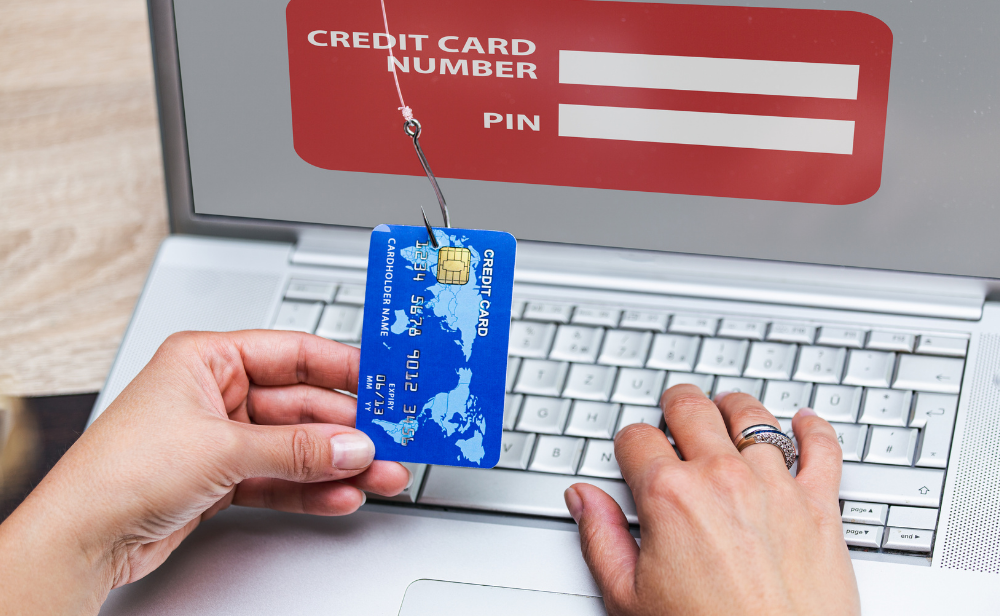
Are Fraudsters Trying to Steal Your Credit Card?
Credit card fraud has affected millions of people in the United States. And there’s a strong possibility it’s happening to you right now.
To conduct fraud, criminals no longer require your physical credit card. On the other hand, credit card fraud has become one of the most widespread cyber security dangers. For instance, a Capital One attack in 2019 exposed the credit card information of nearly 100 million consumers.
So, how can you keep yourself and your credit card safe from identity thieves? We’ll go through how credit card data are stolen, what they can do with them, and how to protect yourself now and in the future in this tutorial.
Scammers’ Top 14 Ways for Getting Credit Card Numbers:
- Theft of wallets or the recovery of misplaced credit cards
- Dumpster diving for credit cards and bank account information
- Fraud committed by family members or friends is referred to as “friendly” fraud.
- Using shimmers and card skimmers
- Using public Wi-Fi to steal your credit card information
- RFID data gathering (intercepting contactless payments)
- Phishing is an attack that uses your personal information to steal it.
- Malware and spyware are installed on your devices.
- Phone calls claiming to be from your bank are a scam.
- Shoulder surfing and copying information from your credit card
- “Formjacking” on your favourite and most trusted websites
- Taking control of your internet banking
- Following a data breach, locating your credit card numbers
- Online retail payment systems are being hacked.
1. Wallets that have been stolen or credit cards that have been lost
Credit card theft is still a problem. A crook can seize your card and use it immediately away if you forget your wallet somewhere or if your wallet is stolen. A stolen credit card has the distinct benefit of being ready to use without additional actions.
2. Dumpster diving for credit cards and bank account information
Credit card fraud can be easily perpetrated through your mail. Anyone can take a pre-approved card out of the trash and use it if you throw it away, dump a replacement card in the trash, or fail to shred your statements.
3. Using shimmers or card skimmers
These tiny devices gather credit card information from the magnetic strips on the card, which fraudsters then use to make a cloned card. Thieves install skimmers on ATMs, gas stations, and other publicly accessible card readers.
Shimmers are the next logical step after card skimmers. Instead of collecting information from your card’s magnetic strip, they crawl inside the reader and grab information from your chip.
4. Using public Wi-Fi to steal your credit card information
Hackers can intercept your connection and acquire whatever data you share, including credit card information, using a “man-in-the-middle” (MITM) attack.
5. RFID data gathering (i.e., intercepting contactless payment)
For contactless payment, many current cards use radio-frequency identification (RFID). Although few fraud cases have been, it may become more widespread as RFID becomes more widely used.
6. Emails or SMS that are fraud
Phishing is a type of social engineering assault that tries to trick you into giving up your personal information over the internet. A phishing mail appears from a reputable agency, such as your bank or the IRS. However, if you share information by clicking on a link or responding to an email/text, the information is sent to a hacker directly.
7. Malware or spyware are malicious programs installed on your computer.
Phishing scams may also try to get you to open attachments that contain malware. This malicious software can access and steal sensitive data from your devices, which it then shares with hackers.
A keylogger, for example, is a sort of malicious software that captures everything you input. Credit card numbers, passwords, emails, and other personal information are sent to the hacker.
8. Calls from scammers
A scammer will phone, pretending to be an official who wants to verify your credit card details. The scammer will often use dire threats to urge you to act, such as jail time for unpaid taxes or criminal behaviour on your card.
9. Shoulder surfing and copying your credit card numbers
Dishonest restaurant staff can steal your credit card information (this scam is called shoulder surfing). A contact center agent can jot down your information when you pay by credit card over the phone.
10.” Formjacking” on your favourite and most trusted websites
To inject harmful software into website forms, hackers deploy a variety of cyberattacks. When you enter it, they get access to your information, including credit card numbers.
On big websites such as Ticketmaster, Newegg, and British Airways, researchers discovered “formjacking” code. Security specialists discovered the code on over 100 real estate websites in 2022.
11. Consolidation of your online bank account
A thief who has access to your credit card company’s login information can utilize your credit as if it were their own. Identity theft is extremely risky because a fraudster can use account information to apply for new credit, take out bogus loans, and acquire personal data.
12. Following a data breach, locating your credit card information
According to research, data breaches grew by 68 percent from 2020 to 2021. Facebook, T-Mobile, Experian, LinkedIn, and other companies exposed millions of account details. A single data leak might expose tens of millions of credit card numbers to hackers on the Dark Web.
13. Online retail payment systems are being hacked.
Many websites that allow you to shop or pay for services maintain your credit card on file. While this is convenient, it also implies that if a hacker later gains access to the company’s systems, they will be able to take the data that has been saved.
14.”Friendly” dishonesty
Family members are frequently the culprits of credit card theft, which may come as a surprise. A trusted family member or acquaintance could gain access to your cards and use them without your knowledge. Alternatively, a family member could open a credit card in your name.
Which Scams Should You Worry About the Most?
With all of these options, you might be wondering which method of credit card fraud is the most dangerous.
Data breaches are to blame for the majority of stolen credit card numbers. Experts believe that data breaches expose the personal information of up to 60 million credit cards per year.
These card numbers are sold on the Dark Web for as little as $14 to hackers. Unfortunately, we can’t (or don’t know how) protect ourselves from data breaches.
Phishing is perhaps the most popular technique of credit card theft that targets individuals nowadays. Scammers who steal your credit card information, on the other hand, seek to keep you unaware of their schemes for as long as feasible (to have time to max out your card).
How Do You Know If Your Credit Card Numbers Have Been Stolen?
Suspicious behaviour on your bank statement or credit card.
Small transactions should also not be overlooked. A $0.01 charge might be a scammer checking your card to see if it’s still operational before making more significant changes.
Your credit report may show new accounts or complex queries.
AnnualCreditReport.com allows you to request a free copy once a year. Look for accounts you didn’t create, numbers that don’t match your statements, or questions you’re unfamiliar with.
Bank, credit card, or credit monitoring service fraud warnings.
Your bank or credit card company may notify you if they suspect a purchase is fraudulent. However, they frequently arrive too late (or not at all). A credit monitoring service tracks all transactions on your card, credit report, and bank account and alerts you to any unusual activity.
Creditors are calling you over deals you didn’t complete.
Scammers who use credit cards have no intention of paying off their debt. It’s a clue that your card has been used in fraudulent purchases and ended up in collections without your knowledge.
Packages arrive unexpectedly.
A scammer may fail to update your shipping address when utilizing your card information. Alternatively, they could place an order for packages to be delivered to your home with the intent of stealing them. Check your credit card statement if you receive unusual mail or packages. (This could also indicate that you’ve been the “brushing” con victim.)
You’ve got a lesser available balance than you anticipated.
Scammers will work swiftly to exhaust your credit limit. Check your statement right away if you’re surprised by the amount owed on your card.
Other indications that your identity has been stolen.
When a credit card is stolen, it usually signifies that a criminal has access to other personal information about you. Missing mail, a decline in your credit score, or unusual login attempts on your online accounts are all symptoms of identity theft.
However, just because there aren’t any symptoms doesn’t mean you’re safe. Your card could still be in the hands of a criminal who is ready to use it.
What Should You Do If Your Credit Card Is Stolen?
As you might expect, most thieves utilize stolen credit card information to make fraudulent purchases.
If a thief skimmed or “shimmed” your card information, they’ll use it to build a cloned card and perform other forms of financial fraud.
If they have your physical card, they’ll use it to buy gift cards and high-end items (a fraud known as “carding”). What is the significance of these items? Gift cards are nearly impossible to track down, and luxury items have a high resale value, resulting in fewer shopping excursions.
While these types of frauds are still prevalent, most credit card theft nowadays does not require a physical card.
Scammers instead make purchases through internet stores using a technique known as “no card present” theft.
Hackers could also profit from data breaches by gaining access to large amounts of card information and selling it on the Dark Web.
Whatever they do with your credit card numbers, the consequences are disastrous.