The Truth About Payday Loans
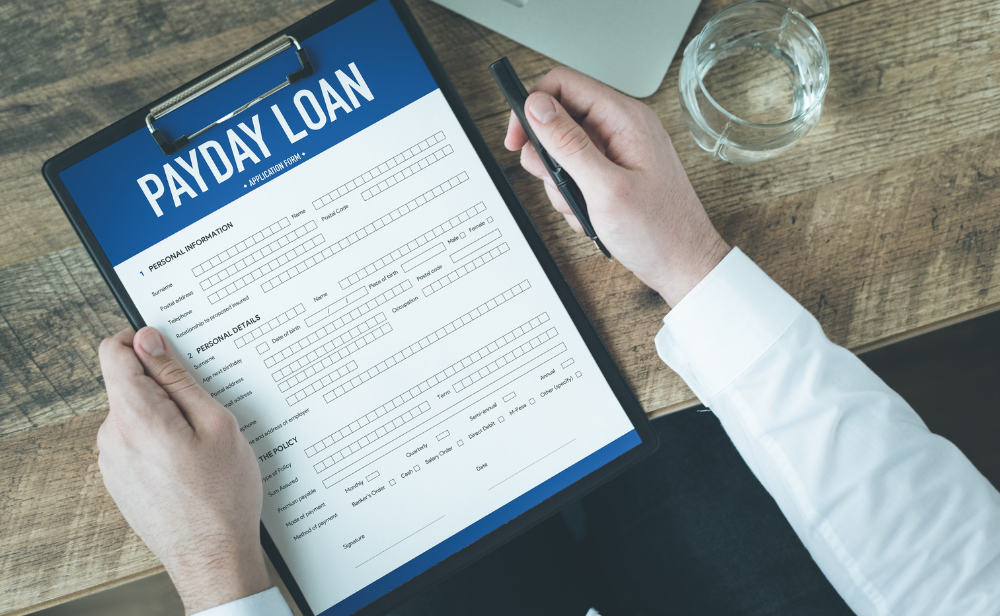
They’ve all been around. Signs in bright yellow and red promise fast cash to help you get by till payday. All you have to do now is move away from your dignity and any remaining expectations of financial stability shortly. We’re talking about payday lenders, of course. They’re the financial industry’s bottom feeders. They draw desperate people through their doors by promising to look the other way regarding substandard or terrible credit scores. Instead, you receive a little payday loan and a mountain of hot, scorching, bad debt.
So, what do you do if you’re broke, live paycheck to paycheck, and have bad credit, and your car’s squeaky wheel falls off and blows up, and you don’t have the money to fix it? What are your options?
What Are Payday Loans
Payday loans are short-term loans that assist you in getting from one payday to the next (for those instances when your paycheck won’t last the entire month). Doesn’t it sound appealing? Wrong. Payday loans can lead to a debt spiral that is difficult to break.
Payday lenders would be the scum of the earth if you didn’t know. Consider us tough. Reconsider. Here’s a story:
Robert got paid at the beginning of the month, but he’s now down to his final $100, and his water heater is broken.
Robert drives to his neighborhood payday lender, skims the loan contract (straight past the excessive interest rate), and puts his signature on the dotted line in exchange for $300. He can now repair his water heater and possibly make it to his next payment.
Robert must write a check dated for his next payday in the amount he borrowed—plus interest—for the lender to overlook his payment history (or lack thereof) and poor credit score.
But he has no idea that by signing up for a rapid cash loan, he has just entered into a gentleman’s agreement with the debt devil. He’s now stuck in a cycle of taking out payday loans to get by until the next payday, and he’s running out of money.
Robert, for example, took out a $300 loan. He paid $45 in interest over a two-week loan at a 15% interest rate. But because he couldn’t repay the debt in two weeks, he opted to prolong it (for another fee, of course). As a result, his $300 loan has grown to $360.
He can’t pay his payment by the next paycheck, so he takes out another payday loan to pay off the first, and the cycle repeats itself two more times. Robert will have borrowed $300 but paid the lender $105 in interest and fees after the process. That’s a 35 percent annual interest rate of 912.50 percent.
Payday Loans: How Do They Work?
Pay attention: The mobsters of the financial world are payday lenders. They propose a remedy for a problem. But when you think you’ve made it out of the woods, they show up, demanding their money. They merely have to knock for a shorter period.
When you apply for a payday loan, you allow the lender access to your checking account so that they can deduct the amount owed (plus a charge) from your account on payday—or you have to write them a postdated check.
Payday lenders aren’t concerned with whether or not you can pay your bills. So when payday arrives, they get their money, and all you can do is hope and pray that you’ll have enough money left over to get you through the month. Payday lenders like to make you believe they’re your only alternative unless you decide to get out of debt. They do it this way to keep you in the lending loop.
Different types of payday loans
Payday lenders can be found in the form of a physical location on the corner, a mobile app, or an online quick cash option. When it comes to your credit score, no matter which one you choose, they all have the same mentality: look the other way.
Cash advances, rapid internet loans, and “one-hour” loans are the most common types of loans. The most prevalent types are as follows:
- Instant Payday Loans
- Loans for 24 Hours
- Loans for 30 days
- Payday Loans Instantly Online
- Payday Loans with Cash/Check Advance
- Loans for military personnel
Payday lenders encourage you to think that acquiring money quickly is the most excellent option… especially if you’re in a hurry. Even their marketing approaches focus on “living in the moment” strategies. However, as we all know, this might lead to problems.
Why Are Payday Loans So Dangerous?
Payday lenders set up shop in the city’s blue-collar neighborhoods because they aim to target those who live paycheck to paycheck. They’re hoping to capture someone during a financial crisis. Credit agencies are used to turn these folks down so they may rush in and “rescue the day.”
To people who are hopeless and desperate, they appear to be heroes. They usually impose a fee for every $100 you borrow from a payday lender. This cost is generally between $10 and $30. Assume you took out a $200 loan with a $30 charge. This fee is equivalent to a 391.07% annual interest rate.
If you cannot repay the loan, the lender may impose late fees, set up repayment arrangements, or offer a rollover (plus another payment).
Millions of Americans are on the same path, believing that dire times need extreme means. 37% of Americans stated they wouldn’t be able to pay for a $400 emergency.
We understand if you’ve ever been in this situation. Perhaps your credit is ruined, and you know that a payday lender will turn a blind eye when lending you money. Or maybe you’ve exhausted all of your options and are at a loss on what to do next.
However, reconsider if you’ve reached a point of desperation and are considering approaching your friendly neighborhood payday lender. There is another option.
How to Stay Away from Payday Loans
It’s terrifying when you’re in over your head and the ends won’t meet. And it’s all too simple in these situations to make a snap judgment that you’ll regret for years (and years).
We wish to assist you in avoiding payday loans like the plague (or coronavirus). So… take a deep breath and pause. It’ll all work out. Let’s go over a few points that can shed some light on your situation:
First and foremost, take care of your Four Walls.
Food, utilities, housing, and transportation are your Four Walls. You can tell those bill collectors to get lost for the time being.
Anything that isn’t nailed down should be sold.
This is not the time to indulge in your hoarding habits. Sell anything that isn’t nailed down and has any value.
Reduce any unnecessary spending.
This is a difficult one, but you must now take action to improve your financial situation. You should never enter a restaurant unless you are employed there.
Do not take on any more debt.
You may believe that this is easier said than done. Wrong. Avoid it. Discard those credit cards. Don’t go back to the payday lender, and don’t take out any more loans.
Find a part-time job to supplement your income.
Getting a second job is the most straightforward strategy to boost your income quickly (or two). There are numerous ways to earn money. It’s simply rolling up your sleeves and getting to work. Look on Craigslist, join a neighborhood Facebook group, or ask a neighbor if they require your handy talents.
Make a financial plan.
Creating a zero-based budget is essential for getting out of debt and onto the path to financial stability. Every dollar has an assignment before the month begins, which is why a budget is on paper.
EveryDollar is a free online budgeting tool that allows you to build a budget in under 10 minutes and start saving money.
Start taking baby steps.
The 7 Baby Steps are your financial and life strategy. They’ll not only place you on a path to live and give like no one else, but they’ll also show you how to take the next step right now when you need it most.
1: Set aside $1,000 for an emergency fund.
2: Using the debt snowball, pay off every debt (excluding the house).
3: Establish a fully financed emergency fund with 3–6 months of costs.
4: Set aside 15% of your annual household income for retirement.
5: Put money aside for your children’s college education.
6: Pay off your mortgage as soon as possible.
7: Create riches and give them out.
Payday lenders should be avoided. It’s time to break free from the paycheck-to-paycheck cycle. However, it would help if you made a decision. It would help if you decided that you would never borrow another money. You don’t have to do it alone, though. We’ll be at your side every step of the journey.
Sign up for a free trial of Creditneat to get a real money plan. This all-access membership includes our bestselling money products, such as Financial Peace University and the premium edition of EveryDollar (the world’s best budgeting tool).
Payday Loan Alternatives
For anyone, the most important thing is to feel financially secure. Employees can only be engaged at work when the financial burden is removed. We advise taking a holistic approach to financial wellness to help your staff flourish.
Creditneat is a non-profit organization that promotes solely ethical financial practices. Before payday, you can rest assured that your employees will never incur high costs to access their earned money.
Payday Loans Have the Power to Damage Your Credit
Payday loans can be quite appealing, particularly to people with little cash reserves and poor credit history. However, just because a payday lender appears unconcerned about your creditworthiness does not indicate that borrowing the money is risk-free.
If you cannot repay the loan on time and do not receive a rollover from the lender, you may face immediate difficulties. The cheque will be deposited on your next payday because most lenders want a postdated check before offering a loan. If the check bounces, you will be in default and may face debt collection. The payday loan company will attempt to collect the debt first. It may try to deposit your check several times or remove money from your bank account in small increments. Each failed effort will very certainly result in bank charges.
If you shut your bank account or try to withdraw money, the lender may call you at inconvenient times, have a law firm send you letters, or call friends and relatives.
More failed attempts may force the lender to seek a lower-value settlement. A lender may not lose money in a settlement arrangement because your debt includes high interest.
If everything else fails, the lender will most likely refer your case to a collection agency, which will begin by calling you. They might even take you to court later, which could land on your credit report’s public records section if a judge rules in the lender’s favor. If any of these things occur, your credit score will be severely harmed, making it more difficult to obtain credit. Even if your credit were terrible before you defaulted on a payday loan, new collection action would almost indeed worsen.
Rather than jeopardizing your credit score, tell the lender as soon as you know your loan check will bounce and ask for a payment plan.
Other possibilities include borrowing money from friends or family to repay the loan or freeing up funds by deferring payment on a less urgent debt. If you don’t have a credit card, think about getting a cash advance to make the payment. You might use an account with overdraft protection to write a check. The overdraft may incur a bank fee, but it may be better to deal with a collection-minded payday lender if you can acquire the funds to cover the cost.