
Should I Pay Off Debt with Money from My IRA?
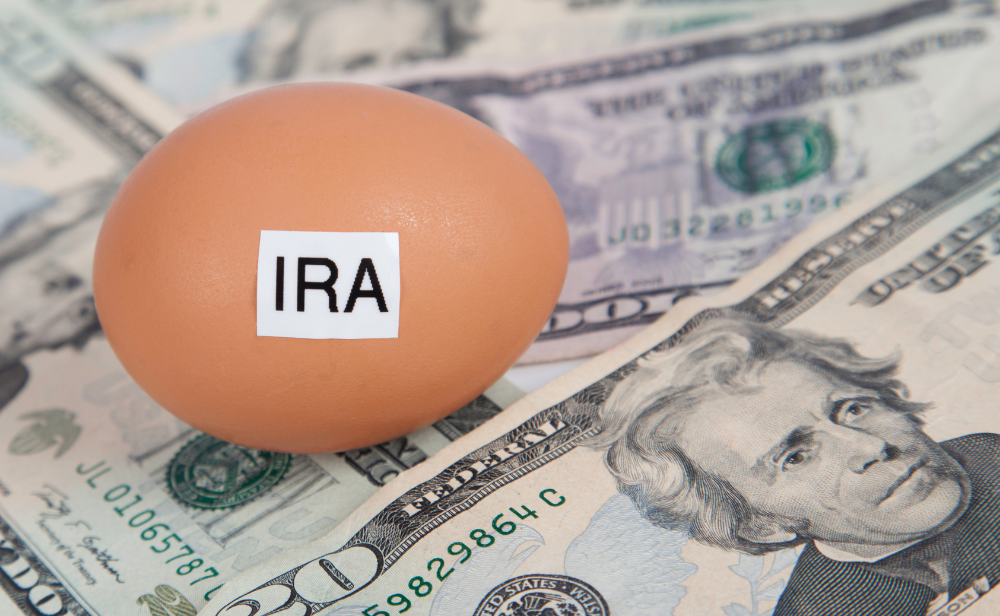
If you’re paying off credit cards, vehicle loans, or school loans, you already know that your debt helps. But hold your horses if you’re thinking about using your retirement savings to dig yourself out of a hole.
While enticing, withdrawing funds from an IRA to pay off debt is bad. That money is subject to excessive early withdrawal penalties and taxes, but it’s also robbing you. We’ll explain what happens if you take money out of your retirement account early, and we’ll show you how to pay off debt without raiding your IRA.
Early IRA Withdrawal Rules and Penalties
An IRA (Individual Retirement Account) is a terrific instrument for building money and ensuring a dignified retirement, whether you pronounce it eye-ruh or sound out each letter. However, retire is the essential word here. Unless you’re trying to escape bankruptcy or foreclosure, Dave Ramsey recommends taking money out of your IRA early. Why? Because devoting your retirement fund to purposes other than retirement might be costly.
To be termed a “nontaxable rollover,” money taken out of an IRA early (before 59 12) must be transferred to another retirement account within 60 days. We repeat it: 60 days! Otherwise, the government will take its portion through fines and taxes. If you’re taking money out of your 401(k) because you’re changing employment and want to transfer it to a new business, make sure you do so within the 60-day window. You will not lose any of your savings this way. After all, it’s your money, and you should keep as much of it as possible.
The penalties and taxes you must pay on that money are determined by the type of retirement account from which it came: 401(k), conventional IRA, or Roth IRA are all options.
401(k)
Early withdrawals from a 401(k) are subject to a 10% penalty. You must also pay taxes on anything you withdraw, but the IRS typically deducts 20% automatically. You may find a higher tax rate if you take out a large sum. So, if you withdraw $20,000 from your 401(k) and are taxed at 22%, you may only receive around $12,000–13,000 (depending on state income tax) once everything is said and done.
But, as we’ll see later, there are several exceptions to incurring penalties on early 401(k) withdrawals.
However, if you’re considering withdrawing funds from your 401(k) to meet a cost or pay off debt, ask yourself: Do I want to borrow money at 30% interest? Certainly not! It’s not always necessary to do the arithmetic to see how much you’d lose.
Traditional Individual Retirement Accounts
A 10% penalty applies to money taken out of a traditional IRA before 59 12. Although there is no automatic withholding, you must still pay federal and state income taxes on the amount you withdrew when filing your taxes.
Like 401(k)s, traditional IRAs have several exceptions to the early-withdrawal penalty (which we’ll go over in a minute). But just because you can withdraw funds from your IRA doesn’t mean you should. Instead of paying 30% to the government, you might put money into a savings account every month and put 100% toward expenses you know are coming up, such as helping your children pay for college or buying a house. Don’t take advantage of your future self just because it’s convenient now.
IRA Roth
Because a Roth IRA is funded with after-tax cash yet grows tax-free (one of the reasons we love it), you can withdraw any of your contributions at any time, without penalty or tax, regardless of your age. However, you must be at least 59 and 12 years old, and the Roth IRA must be at least five years old to withdraw any earnings (i.e., any compound interest growth). Otherwise, you’ll have to pay a 10% early withdrawal fee plus any applicable taxes.
However, putting money into a Roth IRA is that you won’t have to pay taxes on it when you retire. Why would you want to pay extra taxes by pulling money out too soon when you’ve already paid taxes on the money you’re putting in? We believe you should make the most of your Roth IRA, and the easiest way to do so is to leave it alone until retirement.
Exceptions to the Penalty for Early Withdrawal
While any money taken out of a 401(k) or IRA before a particular age is still subject to taxes, there are some scenarios in which the 10% early withdrawal penalty for retirement savings can be avoided.
Both 401(k) and IRA exceptions
- The funds will be used to pay medical expenditures (as long as those expenses add up to 10 percent of your gross income).
- The funds are distributed into roughly equal periodic payments (SEPP), often known as Rule 72. Some people take advantage of this to retire ear
Only for 401(k) Exceptions
- You retire when you reach the age of 55 or later (50 for specific federal and state jobs).
- A Qualified Domestic Relations Order distributes the 401(k) in a divorce.
- You contributed too much to your 401(k) (k).
If you get a “hardship dividend,” the early withdrawal penalty for your 401(k) is waived. According to the IRS, this is money taken from your 401(k) to satisfy an “immediate and heavy financial need,” such as restoring damage to your house after a natural disaster, covering funeral expenses for a loved one, or paying rent to escape eviction. And you can only withdraw the exact amount required for these charges.
However, even as it gets easier to access your 401(k), keep in mind that you will be the one to live off of it when you retire. So be careful what you label an emergency and put your 401(k) aside for a rainy day.
Exceptions for Individual Retirement Accounts
- The funds will cover eligible higher education costs (college tuition, room, board, books, etc.).
- The funds are intended to purchase or construct a first home (up to $10,000).
- If you are unemployed, the money covers your health insurance premiums.
Connect with a SmartVestor Pro if you’re in a situation where you need the money in your IRA to help you escape bankruptcy or foreclosure.
How Do 401(k) Loans Work?
Another common blunder is taking out a 401(k) loan to pay off debt, only to find that you have to repay yourself with interest. Yuck! 401(k) loans, on the other hand, can soon backfire. You must repay the loan within 60 days if you leave your employment. However, you cannot borrow your way out of debt. Therefore you should avoid taking out any loans.
What Are the Long-Term Costs of Withdrawing Early?
“Let the sleeping IRA lie,” says an old saying. No? Only us? However, many people use their retirement accounts as an emergency fund. And the more money you take out now, the less money you’ll have for those beach vacations, golf games, and grandkid visits you dream of in retirement.
You lose all the money you would have earned with compound interest if your IRA became an ATM. Compound interest can be your best friend, but only if you allow it to work for you. (You may use our compound interest calculator to do the math.) That’s what we refer to as “free money for the patient.” This is money for the future, not for today. You’re in it long, and investing requires patience and self-control.
Consider taking $50,000 from your IRA to pay down your student loan debt. You could pay $5,000 in fines and another $15,000 in taxes, leaving you with only $30,000. That’s not acceptable! However, if you left that IRA alone for 20 years at a 12 percent rate of return, the original $50,000 would be worth nearly $544,000! And that’s assuming you don’t give anything else. See? Patience pays you big time when you leave that money alone.
Use our investment calculator to determine how much your IRA will be worth when you retire.
Many people argue that they may make up for the loss by contributing more money to their IRA later. However, there are annual contribution limits.
We know you work hard, and the last thing you want is to work even more complex and longer in retirement because you didn’t save enough. Don’t be one of the 90% millennials who regret taking money out of their retirement accounts.
What Are Some Other Debt-Reduction Options?
So, how can you pay off your debt if you don’t take money out of your retirement account? Here are some tried-and-true debt-reduction strategies that you won’t regret.
Make a budget.
Taking charge of your finances begins with a written plan—a budget. And instead of wondering where your money went afterward, a budgeting tool like EveryDollar forces you to be more intentional with the money you have today. Giving every dollar a purpose helps you develop a substantial emergency fund so you won’t dip into your IRA when life throws you a curveball.
Consider using the debt snowball strategy.
The debt snowball method is the quickest way to pay off debt since it rewards you with money. Here’s how you go about it: List all of your debts from smallest to largest (regardless of interest rate) and pay off the smallest amount first while making minimum payments. Then, using that budget we outlined before, reduce your spending and increase your debt payments. When that snowball starts to roll, you’ll have the momentum you need to break out of debt finally!
Speak with a financial advisor.
If you still believe that borrowing from your retirement account is your only option, you may need someone to help you sort through your options. A Ramsey Solutions Master Financial Coach can motivate you and assist you in making the most significant financial decisions possible. Find a coach in your area right now.
Take, for example, Financial Peace University.
Start a free trial of Ramsey+ and take control of your finances if you realize your retirement goals. You’ll discover everything you need to know about paying off debt, saving money, sensibly investing in growing wealth, and becoming an everyday millionaire. It’s never too late to make positive financial changes and set yourself up for a prosperous future!